Trump Economy

Blurb:

Inflation rose one-tenth of a percentage point to 2.8% for the year ending in November 2025, the Bureau of Labor Statistics reported Thursday in an update to the personal consumption expenditures index, which is the Federal Reserve’s preferred inflation gauge.

Thursday’s report is the last the Fed will receive before it votes on interest rates next week.

Thursday’s report includes data for both October and November, unusually, because the government shutdown prevented the scheduled release of key economic reports.

Blurb:

Sales by U.S. retailers rose by much more than expected in November, signaling that the household sector remains resilient and consumer spending continues to support rapid economic growth.

Retail spending rose 0.6 percent in November, exceeding even the most optimistic estimates. Analysts surveyed by Econoday expected sales to rise by around 0.2 percent, with estimates ranging from a decline of 0.5 percent to a gain of 0.4 percent.

Since the start of the year through November, sales are up 3.7 percent compared with the first 11 months of the prior year. During that period, consumer prices rose by around 2.7 percent, implying that real sales were up by one percent.

Blurb:

NEW YORK — Up until this week, Wall Street has generally benefited from the Trump administration’s policies and has been supportive of the president. That relationship has suddenly soured.

When President Donald Trump signed the One Big Beautiful Bill into law in July, it pushed another significant round of tax cuts and also cut the budget of the Consumer Financial Protection Bureau, at times the banking industry’s nemesis, by nearly half. Trump’s bank regulators have also been pushing a deregulatory agenda that both banks and large corporations have embraced.

But now the president has proposed a one-year, 10% cap on the interest rate on credit cards, a lucrative business for many financial institutions, and his Department of Justice has launched an investigation into Federal Reserve Chair Jerome Powell that many say threatens the institution that is supposed to set interest rates free of political interference.

Blurb:

Senate Majority Leader John Thune and Speaker Mike Johnson voiced skepticism Tuesday on President Donald Trump’s move to temporarily cap credit card interest rates.

“I think that would probably deprive an awful lot of people of access to credit around the country,” Thune told reporters. “Credit cards would probably become debit cards.”

“That’s not something I’m out there advocating for — let’s put it that way,” he added.

Thune’s comments come after Trump posted on Truth Social that he was calling for a one-year cap of 10 percent interest on credit cards starting Jan. 20.

Blurb:

President Trump has made lowering prescription drug prices a clear priority, repeatedly arguing that Americans should not be forced to pay more for medicine than patients in other developed countries. Drugmakers have publicly welcomed that message. But their actions tell a more complicated story.

First reported by Reuters this week, pharmaceutical companies are raising list prices on more than 350 drugs for 2026. Many of the increases were small, but others were not, including sharp hikes on certain hospital-administered and specialty medicines that patients and providers rely on every day.

Blurb:

The U.S. labor market ended 2025 on a soft note, with job creation in December less than expected, according to a report Friday from the Bureau of Labor Statistics.

Nonfarm payrolls rose a seasonally adjusted 50,000 for the month, lower than the downwardly revised 56,000 in November and short of the Dow Jones estimate for 73,000.

At the same time, the unemployment rate fell to 4.4%, compared to the forecast for 4.5%.

The report presented a muddy view of the labor market, with companies reporting a low level of hiring but households showing employment gains.

In addition, revisions brought totals down for the prior months. The November total saw a slight downward revision of 8,000 to the payrolls number, while October’s loss was even more than originally reported, now at 173,000 compared to the prior estimate of 105,000.

Blurb:

President Donald Trump announced Wednesday that his administration is moving to ban major investors from buying up single-family homes in the U.S. in an attempt to lower housing prices.

Trump claimed in a Truth Social post that former President Joe Biden and congressional Democrats have caused “record high inflation,” which has caused the “American Dream” to become “increasingly out of reach for far too many people.”

“For a very long time, buying and owning a home was considered the pinnacle of the American Dream,” Trump wrote in the social media post. “I am immediately taking steps to ban large institutional investors from buying more single-family homes, and I will be calling on Congress to codify it.”

“People live in homes, not corporations,” the president emphasized.

Blurb:

This week, President Trump sent shockwaves through Wall Street when he announced via Truth Social his plan to ban large corporations and foreign entities from purchasing single-family homes. The proposal targets institutional investors like Blackstone and other real estate investment trusts that have been buying up American homes by the hundreds of thousands —  driving up prices and locking out first-time buyers.

Political support came swiftly from both sides of the aisle. Sen. Bernie Moreno, R-Ohio, announced that he would introduce legislation to codify the ban, saying, “Millions of young Americans have been locked out of the American Dream.” Rep. Riley Moore, R-W.V., called it “huge,” while Sens. Josh Hawley, R-Mo., and Jim Banks, R-Ind., signaled support. Even Sen. Elizabeth Warren, D-Mass., said she’s been advocating for years to limit Wall Street from buying up America’s homes.

The market reaction was severe. Invitation Homes tumbled 6 percent. Blackstone fell 9 percent. American Homes 4 Rent dropped 6.3 percent. And Wall Street understood completely: Trump means business. But for Main Street families, this proposal offers real hope.

Blurb:

The Department of Health and Human Services will be freezing funding for childcare services in five blue states, the Trump administration announced on Monday.

The New York Post reported that over $10 billion in childcare funding would be paused for California, Colorado, Illinois, Minnesota and New York after funds were being funneled to illegal immigrants. Further, all 50 states will be required to provide increased data before releasing funds for childcare.

HHS further announced that it would close a Biden-era loophole that allowed for payouts without verifying attendance. Under the new guidelines, states can require payouts to be granted by attendance rather than enrollment and upfront payouts are no longer required.

“Paying providers upfront based on paper enrollment instead of actual attendance invites abuse,” Deputy Secretary Jim O’Neill said in a statement. “In Minnesota, we’ve seen credible and widespread allegations of fraudulent daycare providers who were not caring for children at all. The reforms we are enacting will make fraud harder to perpetrate.”

Blurb:

The largest gain in jobs was in the healthcare sector, with 46,000 jobs added.

The US economy added 64,000 jobs in November, beating economists’ expectations. The unemployment rate has remained little changed from September, at 4.6 percent for the year’s penultimate month, the Bureau of Labor Statistics revealed on Tuesday. The release of November’s jobs report was delayed due to the government shutdown that went from October 1 through November 12, and the October jobs report was not released due to the shutdown.

The largest gain in jobs was in the healthcare sector, with 46,000 jobs added. Of that total, 24,000 were in ambulatory health care services, 11,000 were in hospitals, and 11,000 were in nursing and residential care facilities. Construction saw 28,000 jobs added, and 18,000 jobs were added in social assistance. Transportation and warehousing saw a decrease in 18,000 jobs. The BLS noted that the federal government went down by 6,000 jobs, with a total of federal government employment going down by 271,000 since January.

Blurb:

The Federal Reserve reduced its key interest rate by a quarter-point for the third time in a row Wednesday but signaled that it may leave rates unchanged in the coming months, a move that could attract ire from President Donald Trump, who has demanded steep reductions to borrowing costs.

In a statement released after a two-day meeting, the Fed’s rate-setting committee suggested further rate cuts would depend on signs that the economy is faltering. And in a set of quarterly economic projections, Fed officials signaled they expect to lower rates just once next year.

Wednesday’s cut reduced the rate to about 3.6%, the lowest it has been in nearly three years. Lower rates from the Fed can bring down borrowing costs for mortgages, auto loans, and credit cards over time, though market forces can also affect those rates.

Blurb:

President Donald Trump hosted Saudi Crown Prince Mohammed bin Salman at the White House on Tuesday, featuring a military flyover, horse-drawn escort, and cannon salutes, while praising his reforms and friendship. The crown prince announced an increase in Saudi investments in the U.S. to nearly $1 trillion, targeting AI, nuclear energy, and defense sectors including F-35 jet sales.

The president touted the verbal commitment of nearly a trillion dollar investment in the US from the Saudi kingdom.

Historic win for Trump as the kingdom vows massive investment spike in the American economy.

Blurb:

On Tuesday, in several elections where they were already expected to win, the Democrats bragged that they beat the GOP on “affordability.”

Of the Democrats who will be charged with making America more affordable, now: a socialist mayor-elect in New York City who doesn’t seem to have the slightest idea of how New York City or economics works; a governor-elect in Virginia who doesn’t have the gumption to stand up against a kiddie-assassination fantasist, much less more palatable but still unconscionably free-spending members her own party; and a governor in New Jersey who will likely continue to pursue the same policies that have given the state the eighth-highest cost of living in the nation.

All of these people said they were running against President Donald Trump, who’s been in office for less than a year now.

Blurb:

WASHINGTON: US Federal Reserve Chair Jerome Powell warned Tuesday (Oct 14) that risks to employment had risen in recent months, noting there had been a sharp slowdown of job creation in the world’s leading economy.

“While the unemployment rate remained low through August, payroll gains have slowed sharply, likely in part due to a decline in labor force growth due to lower immigration and labor force participation,” he told a conference in Philadelphia.

Economic growth appears to be holding up well, he added.

JUST IN: Trump Administration Threatens MASS LAYOFFS If Government Shuts Down– wltreport.com
Source Link
Excerpt:

This could be very big…

Ahead of a possible government shutdown on October 1st, the White House Office of Management and Budget has instructed federal agencies to prepare for mass layoffs.

Thousands of federal employees — specifically in agencies that lack funding and don’t align with President Trump’s goals — could permanently lose their jobs if the shutdown happens.

Here are the details:

Return of the Cypress: Iran's Foreign Policy Ambitions in Central ...

Return of the Cypress: Iran's Foreign Policy Ambitions in Central ...

Trump, Eye On Central Asia, Clinches $12B In Deals With Kazakhstan, Uzbekistan– www.rferl.org
Source Link
Excerpt:

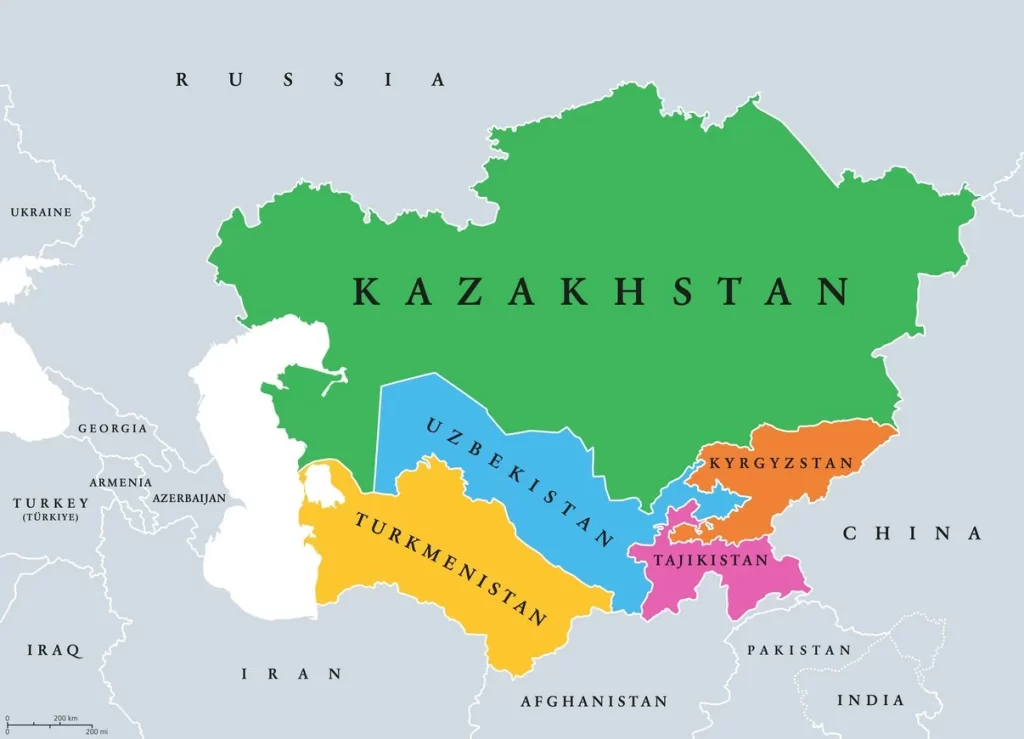
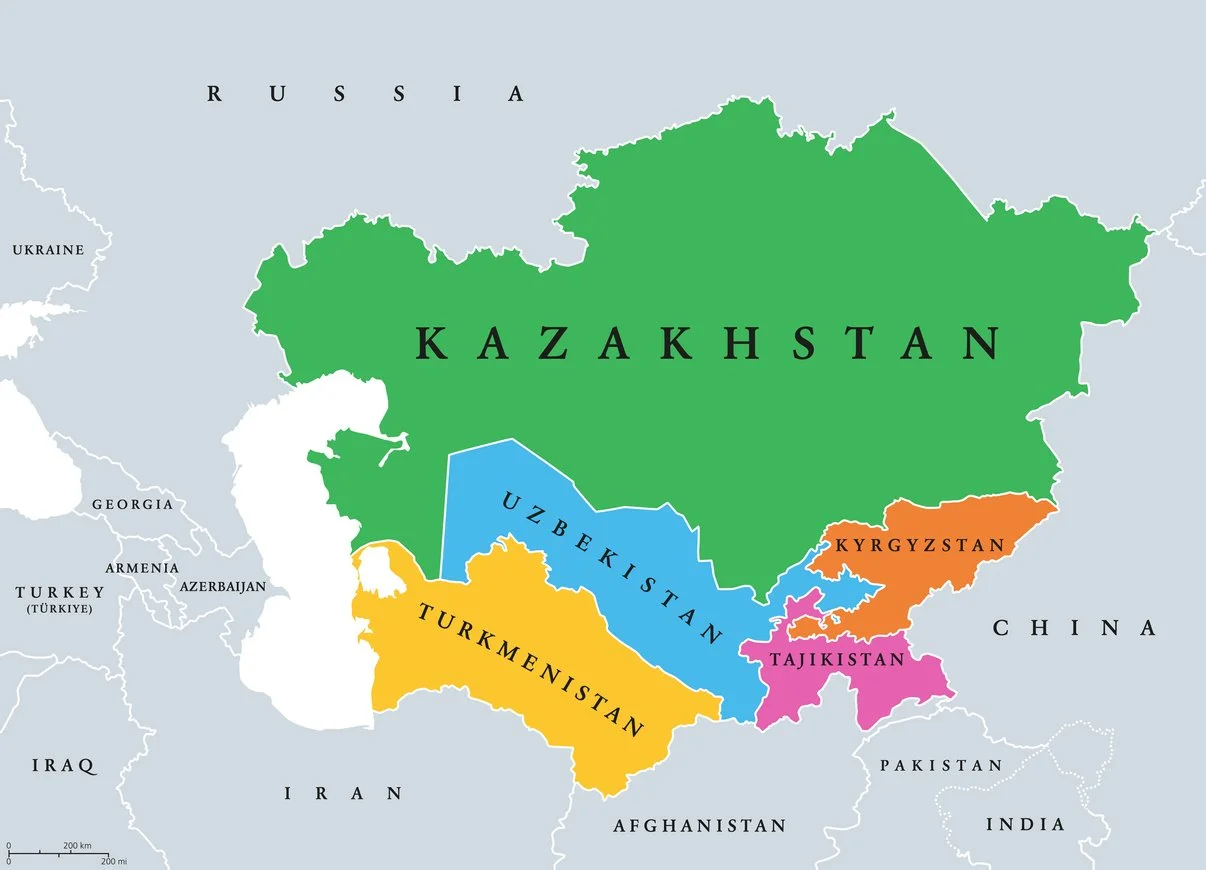
US President Donald Trump has clinched $12 billion in trade deals with Uzbekistan and Kazakhstan amid a push to deepen economic ties with the strategic Central Asian region.

Uzbekistan agreed to buy 22 787 airplanes from Chicago-based Boeing for more than $8 billion, Trump said in a September 22 post on Truth Social.

“We will continue to work together on many more items!” Trump said in the post.

Meanwhile, Kazakhstan signed an agreement to buy 300 US locomotives as well as other rail equipment from Pennsylvania-based Wabtec Corporation for $4.2 billion. The US Commerce Department described it as the largest rail deal in U.S. history.

“This landmark deal advances US manufacturing jobs and accelerates growth, opportunity, and connectivity in America and Central Asia,” Commerce Secretary Howard Lutnick said during a signing ceremony in New York with Kazakh President Qasym-Zhomart Toqaev.

Trump earlier in the day spoke by phone with Toqaev, who is in the United States to attend the UN General Assembly.

Trump is seeking to strengthen trade and investment ties with resource-rich Central Asia as he focuses on ending US dependence on China for critical minerals, including rare earths.

JD Foster: Trump Is Right In Calling For The End To Quarterly Reporting– dailycaller.com
Source Link
Excerpt:

Sometimes, it’s the little things. Sometimes, it’s bigger things. This time it’s the quarterly earnings report required by law of America’s publicly traded companies. And it’s President Trump suggesting on Truth Social that we should do away with quarterly earnings statements in favor of bi-annual statements. He’s right.

The Securities and Exchange Commission (SEC) requires publicly traded companies to report their earnings quarterly. In contrast, the hyper-regulative European Union and United Kingdom require six-month reporting, though corporations are allowed to make quarterly statements if they want.

Quarterly reporting is just one of the hundreds of rules U.S. publicly traded companies face that privately held companies don’t. Nearly all of these rules make some sense in isolation, but collectively they represent an enormous burden, one effect of which is that even as the American economy has grown steadily over the years, the number of publicly traded companies had fallen by half. Houston, we have a problem.

Quarterly reporting is expensive to the corporation and a major time burden for senior management. These are relative nuisances.

Source Link
Excerpt:

In a striking turn of events, several senior banking executives have broken their long-standing silence, revealing that political coercion, not just regulatory prudence, steered decisions about whose bank accounts to close and services to deny.

Their admissions come on the heels of President Donald Trump’s executive order, Guaranteeing Fair Banking for All Americans, issued on August 7, 2025, which explicitly outlaws politicized or unlawful debanking and prohibits the nebulous use of “reputational risk” as justification for denying service.

Until now, institutions like JPMorgan, Bank of America, CitiGroup, and PNC have staunchly defended their practices, insisting that account closures rested solely on objective criteria. But in an extraordinary shift, these same banks through unnamed executives quoted by Fox News Digital have now voiced concerns about the “very, very real” pressure they felt from federal regulators under the Obama and Biden administrations.

Source Link
Excerpt:

Goldman Sachs is taking the heat for its call that heavier tariff-induced consumer inflation is ahead, but it’s far from alone in that view among its Wall Street brethren.

Despite investors’ embrace of Tuesday’s fairly benign consumer price index report, economists expect that the biggest impact to inflation is yet to come.

With pre-tariff inventories rolling off, effective tariff rates climbing higher and companies less willing to absorb higher costs from the duties, the general feeling is that consumers are increasingly going to feel the bite through the rest of the year.

Source Link
Excerpt:

Inflation held at 2.7% for the year ending in July in the consumer price index, the Bureau of Labor Statistics reported Tuesday, suggesting that the price pressures from tariffs were not as strong as originally feared.

Forecasters expected inflation to rise for a third straight month to 2.8%.

Yet the report contained some signs of underlying inflationary pressure. Core inflation, a measure that strips out the volatile categories of food and energy prices, rose two-tenths of a percentage point to 3.1%, higher than expected. For just the month, core prices were up 0.3%, the largest monthly increase of the year so far.

Source Link
Excerpt:

WASHINGTON, DC — President Donald J. Trump signed an executive order on August 7, 2025, aimed at preventing financial institutions from denying services to Americans based on their political or religious beliefs or lawful business activities. The order comes in response to past instances where banks and regulators allegedly engaged in politically motivated account closures and restrictions.

The order cites examples of financial institutions participating in government-directed surveillance programs after the events of January 6, 2021, flagging transactions related to companies such as Cabela’s and Bass Pro Shops or payments referencing “Trump” or “MAGA” without evidence of criminal conduct. It also references “Operation Chokepoint,” a prior federal effort that pressured banks to limit services to certain legal industries deemed high-risk or controversial by regulators.

Source Link
Excerpt:

Inflation numbers released Tuesday beat economists’ expectations, sending one CNN anchor into an emotional tailspin as she attempted to explain away why President Donald Trump keeps winning each news cycle.

The July consumer price index (CPI) report showed that total energy prices fell 1.1% while food prices held steady and shelter ticked up 0.2%. Gas prices dropped 2.2%, an anomaly for a summer month where a record number of Americans travel during the summer holiday season, but also a reflection of a global economic slowdown.

On CNN, a morning anchor could barely stifle her surprise that Americans aren’t feeling a greater pinch at the grocery store after countless economic experts warned about the shock that President Trump’s tariffs would have on food prices.

Source Link
Excerpt:

July’s Consumer Price Index (CPI) report indicates that inflation is cooling more than expected, providing a boost to stock futures and placing greater weight on the U.S. dollar.

Consumer prices rose 2.7 percent in the 12 months since last July. This matched the 12-month period since June and came in below the expected rate of 2.8 percent. Core CPI, often considered a more accurate reading of long-term trends in the economy, rose .3 percent and 3.1 percent from a year ago.

Shelter costs ticked up 0.2 percent, accounting for most of the index’s gain, according to the BLS. Food prices held steady, while energy prices dropped 1.1 percent.

Source Link
Excerpt:


The Bureau of Labor Statistics released July’s Consumer Price Index this morning, and the numbers tell a complicated story. While overall inflation held steady at 2.7 percent annually, core inflation—the measure that strips out volatile food and energy prices—accelerated to 3.1 percent, its highest level since March and well above the Federal Reserve’s 2 percent target.