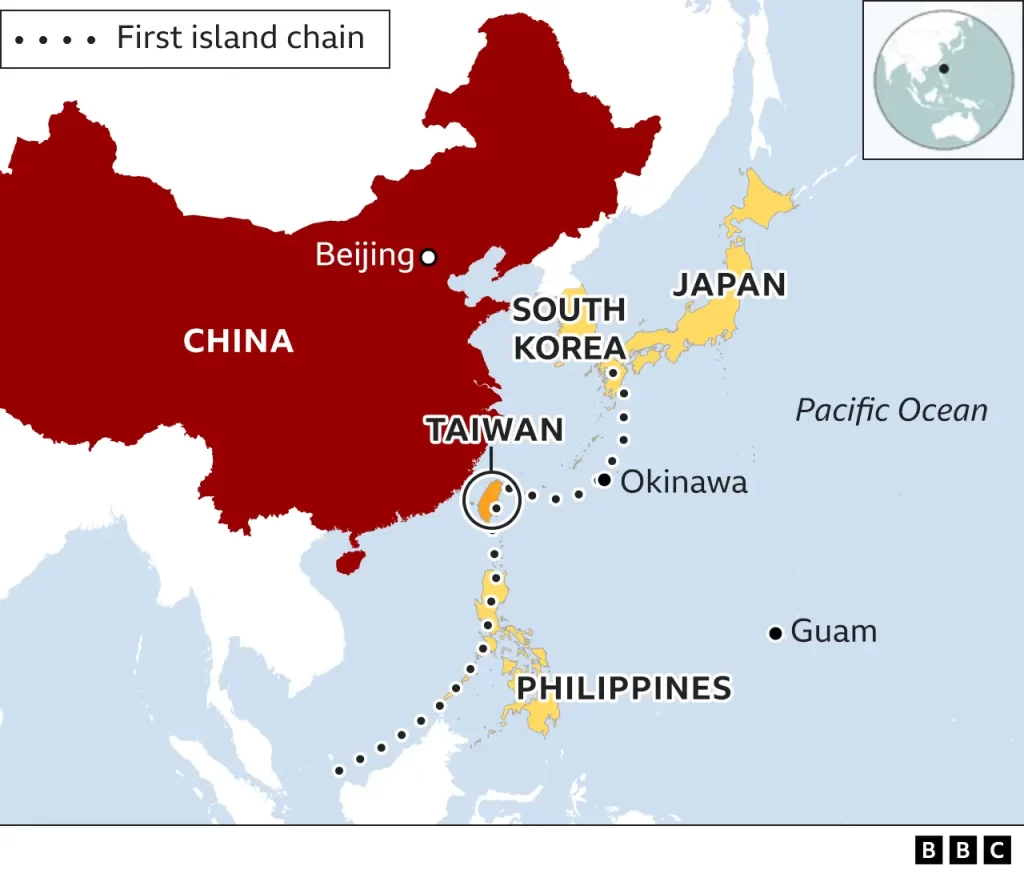
03a China

Source Link
Excerpt:

On July 22, America’s largest transgender youth “clinic” shut its doors in response to an executive order banning the practice of chemical and surgical mutilation of children.

The Center for Transyouth Health and Development (CTH) at Childrens Hospital Los Angeles has administered experimental transgender “treatments” for more than 30 years, providing puberty-blocking hormones and genitalia surgeries to thousands of children and young adults. Despite a complete lack of data to support the practice and mounting evidence of its harm, CTH clinicians had no intention of shutting down before Trump’s order forced the hospital’s hand.

Entitled “Protecting Children from Chemical and Surgical Mutilation,” the White House order states that U.S. policy will no longer “fund, sponsor, promote, assist, or support the so-called ‘transition’ of a child from one sex to another,” and will “rigorously enforce all laws that prohibit or limit these destructive and life-altering procedures.”

After a “thorough legal and financial assessment,” the hospital decided to cut its losses.

Source Link
Excerpt:

During a June 17 speech at the Center for Strategic and International Studies in Washington, U.S. Pacific Fleet commander Adm. Steve Koehler declared that despite an ongoing campaign of intimidation against its smaller neighbors in the South China Sea, “China’s pressure is not working well. It has failed to intimidate Southeast Asian claimants and make them surrender their sovereign rights.”

Koehler detailed examples of Chinese harassment and violence over the last year against Indonesia, Malaysia, Vietnam, and especially the Philippines, but noted that in each case, the Southeast Asian states have refused to back down. The admiral echoed this assessment the following month in a speech in Manila on the anniversary of the Philippines’ 2016 arbitral victory in The Hague, which ruled most of Beijing’s maritime claims in the South China Sea illegal.

That China is faltering might surprise casual observers of the South China Sea disputes, but it matches the available evidence. China’s efforts to establish control over the sea have plateaued over the last four years. That came after nearly a decade of steady gains. The strategy that won Beijing control over much of the body of water, despite the illegality of its claims, was centered on a campaign of intimidation and non-lethal force, often dubbed “gray zone” coercion. That campaign is no longer working but the Xi Jinping regime is unwilling, and likely unable, to accept that reality and seek compromise with its Southeast Asian neighbors. The result is a dangerous cycle of brinksmanship, but one that is not delivering results for Beijing. To help Southeast Asian partners, especially the Philippines, remain resilient and deter Beijing from military escalation, the United States should follow through with plans to strengthen force posture and support the military modernization of partners in the region.

Source Link
Excerpt:

In brief: There’s a strange situation occurring in China: despite Nvidia’s high-end AI chips being restricted from export to the country, businesses that repair these GPUs are experiencing a boom in demand. One company now handles up to 500 AI chip repairs every month.

The US has restricted the export of Nvidia’s most powerful AI chips to China since 2022 over fears that they could be used for military purposes.

Although these chips aren’t officially available in the Asian nation, a booming repair business has emerged. Reuters reports that one firm in the country, which began fixing gaming GPUs 15 years ago and started including AI chips in 2024, created a new company to handle all accelerator-related customer repairs, which now account for 500 repairs per month.

The company has been advertising its extensive facilities on social media. It even boasts a room that can pack 256 servers to simulate customers’ data center environments.

It’s a lucrative business, with the firm charging between 10,000 yuan and 20,000 yuan ($1,400 to $2,800) to fix one of these GPUs depending on the complexity of the repair.

Source Link
Excerpt:

As Taiwan concluded its largest-ever Han Kuang military exercise, annual war games designed to test the island’s ability to repel a Chinese invasion, China simultaneously launched a series of back-to-back drills, overtly simulating an attack and applying strategic pressure. The People’s Liberation Army (PLA) Eastern Theatre Command issued daily updates detailing synchronized maneuvers designed to mirror and counter Taiwan’s activities.

The 2025 Han Kuang exercise, held from July 9 to 18, was the longest and most comprehensive iteration since its inception in 1984. It marked a significant shift toward whole-of-society defense, emphasizing joint combat operations and responses to “grey zone” threats. The drills featured over 22,000 reservists and incorporated both domestically developed and U.S.-supplied weapons, including Sky Sword II missiles, Abrams M1A2T tanks, and HIMARS rocket systems. For the first time, Han Kuang was paired with the Urban Resilience Exercises, a multi-month campaign held from April through July to test Taiwan’s ability to withstand a prolonged conflict through full societal participation.

The computer-aided phase of the drill was extended from 8 to 14 days, while the live-fire segment doubled from 5 to 10. Key focus areas included electronic warfare, rapid mobilization, integrated air and missile defense, maritime security, and ground operations. The traditionally scripted exercises were replaced with 24/7 unscripted scenarios simulating combat in urban areas, civil-military coordination, and mass evacuation drills in real-world locations such as hypermarkets.

Source Link
Excerpt:

Last month, the Department of Justice charged two Chinese nationals for smuggling a scientifically classified potential agroterrorism fungus into the United States. They were allegedly receiving funding from China to research the pathogen for potential future attacks, highlighting the dangers China could pose to the U.S. food supply in the future at a time it has already effectively infiltrated American agriculture through land acquisition.

China’s acquisition of U.S. land is a well-documented national security threat, especially as it continues to purchase land in suspicious proximity to U.S. military bases. This strategic investment by China has rapidly developed, with China only owning approximately 13,720 acres in 2010 growing to the 277,336 acres it owned as of Dec. 2023.

Despite the number of acres reported in the U.S. Department of Agriculture’s Agricultural Foreign Investment Disclosure Act Dec. 2023 report, this data “should be interpreted as a minimum.” The data disclosed to the USDA is collected through voluntary reporting. This creates gaps in the database, with 3.1 million acres unaccounted for. Additionally, there is a caveat in the reporting, as entities can list “no predominant country” in their filing. Roughly 2.3 million acres account for no foreign investor and no predominant country listed. The number of Chinese-controlled acreage is highly likely to be far larger than reported.

Wyoming’s New Rare-Earth Mine Could End China’s Monopoly – Daily Signal

Source Link
Excerpt:

The first new U.S. rare-earth mine in 70 years broke ground this month in Wyoming.

Ramaco Brook Mine, which contains 1.7 million tons of rare earth minerals, is a “groundbreaking discovery” that “marks a turning point for America,” the Department of Energy announced.

Source Link
Excerpt:

UNESCO, the  United Nations Educational, Scientific and Cultural Organization, is an international organization that runs under the auspices of the United Nations. UNESCO’s charter is to promote “… cooperation in education, science, culture and communication to foster peace worldwide.” Among other things, UNESCO administers World Heritage sites. But in recent years, UNESCO has also been accused of slanted, pro-China, pro-Palestine stances, among other woke priorities.

On Tuesday, the New York Post broke the story that President Trump is withdrawing the United States from UNESCO due to these priorities. Under President Biden, the U.S. rejoined UNESCO in 2021, after President Reagan withdrew the U.S. from the organization in 1983.

Now we’re to be out again.

President Trump is pulling the US out of the United Nations Educational, Scientific and Cultural Organization (UNESCO), citing its anti-America and anti-Israel leanings as well as its woke agenda, The Post has learned.

Trump ordered a 90-day review of America’s presence in UNESCO back in February, with special emphasis on probing any “anti-Semitism or anti-Israel sentiment within the organization.”

Upon conducting the review, administration officials took issue with UNESCO’s diversity, equity, and inclusion policies as well as its pro-Palestinian and pro-China bias, a White House official told The Post.

Source Link
Excerpt:

Treasury Secretary Scott Bessent on Tuesday said he is likely to hash out an extension of President Donald Trump‘s upcoming trade deadline with China when he meets with his Chinese counterparts in Stockholm, Sweden, next week.

The two sides in mid-May agreed to a 90-day suspension of most of the heavy tariffs on each others’ goods while they continued trade negotiations. That suspension is set to expire on Aug. 12.

But “we’ll be working out what is likely an extension” during talks in Stockholm on Monday and Tuesday, Bessent said in a Fox Business interview.

“I think trade is in a very good place with China,” he said.

Swedish Prime Minister Ulf Kristersson later Tuesday morning confirmed that his country would host the latest round of talks between Washington and Beijing.

“It is positive that both countries wish to meet in Sweden to seek mutual understanding,” Kristersson said on X in a translated post.

Source Link
Excerpt:


BEIJING — The head of Nvidia downplayed his role in getting the U.S. government to lift a ban on selling an advanced computer chip in China and said it will take time to ramp up production once orders for the AI-processor come in.

CEO Jensen Huang, speaking Wednesday in the Chinese capital Beijing, was upbeat about the prospects for the H20 chip, which was designed to meet U.S. restrictions on technology exports to China but nonetheless blocked in April.

He met U.S. President Donald Trump before his trip and his company announced this week it had received assurances that sales to China would be approved.

“I don’t think I changed his mind,” Huang told a cluster of journalists, many of whom asked for his autograph or to take selfies with him.

A carefully organized press conference at a luxury hotel descended into a crowd scene when Huang arrived in his trademark leather jacket and started taking questions randomly in his characteristic casual style.

Export controls and tariffs were something companies must adapt to in a world he said was reconfiguring itself. He described his role as informing governments in the U.S. and elsewhere of the nature and unintended consequences of their policies.

The decision to lift the ban on the H20 chip was entirely in the hands of the American and Chinese governments and whatever trade talks they had, he said.

Source Link
Excerpt:

The BRICS bloc of developing nations at their summit in Brazil on Sunday condemned the increase of tariffs and attacks on Iran, but refrained from naming US President Donald Trump.

The group’s declaration, which also took aim at Israeli military actions in the Middle East, spared its founding member Russia from criticism and mentioned war-torn Ukraine only once.

The bloc issued a declaration in which they raised “serious concerns” about the rise of tariffs which it said were “inconsistent with WTO (World Trade Organisation) rules.” In an indirect swipe at the US, they said those restrictions ”threaten to reduce global trade, disrupt global supply chains and introduce uncertainty.”

Lula also criticised NATO’s decision to hike defence spending up to 5% of member states’ GDP. He said it was “always easier to invest in war than peace.”

The declaration also criticised the attacks on Iran without mentioning the US or Israel, the two nations who conducted them.

BRICS leaders expressed “grave concern” for the humanitarian situation in Gaza, called for the release of all hostages, a return to the negotiating table and reaffirmed their commitment to the two-state solution.

The group’s 31-page declaration mentions Ukraine just once, while condemning “in the strongest terms” recent Ukrainian attacks on Russia.

Source Link
Excerpt:

Brazil is playing host to a summit of the BRICS bloc of developing economies Sunday and Monday during which pressing topics like Israel’s attack on Iran, the humanitarian crisis in Gaza and trade tariffs imposed by U.S. President Donald Trump are expected to be handled with caution.

Analysts and diplomats have said the lack of cohesion in an enlarged BRICS, which doubled in size last year, may affect its ability to become another pole in world affairs. They also see the summit’s moderate agenda as an attempt by member countries to stay off Trump’s radar.

Brazil’s President Luiz Inácio Lula da Silva has some of his priorities, such as debates on artificial intelligence and climate change, front and centre for the talks with key leaders not in attendance.

Lula said in his speech on Sunday that “we are witnessing the unparalled collapse of multilateralism” and that the meeting is taking place “in the most adverse global scenario” of the four times Brazil has hosted it. He called for the group to promote peace and mediate conflicts.

Source Link
Excerpt:

RIO DE JANEIRO — Brazil will play host to a summit of the BRICS bloc of developing economies Sunday and Monday during which pressing topics like Israel’s attack on Iran, the humanitarian crisis in Gaza and trade tariffs imposed by U.S. President Donald Trump are expected to be handled with caution.

Analysts and diplomats said the lack of cohesion in an enlarged BRICS, which doubled in size last year, may affect its ability to become another pole in world affairs. They also see the summit’s moderate agenda as an attempt by member countries to stay off Trump’s radar.

Brazilian President Luiz Inácio Lula da Silva will have some of his priorities, such as debates on artificial intelligence and climate change, front and center for the talks with key leaders not in attendance.

China’s President Xi Jinping won’t attend a BRICS summit for the first time since he became his country’s leader in 2012. Russian President Vladimir Putin, who will make an appearance via videoconference, continues to mostly avoid traveling abroad due to an international arrest warrant issued after Russia invaded Ukraine.

The restraint expected in Rio de Janeiro marks a departure from last year’s summit hosted by Russia in Kazan, when the Kremlin sought to develop alternatives to U.S.-dominated payment systems which would allow it to dodge Western sanctions imposed after Russia’s full-scale invasion of Ukraine in February 2022.

Source Link
Excerpt:


President Trump threatened to impose an additional 10 percent tariff on countries “aligning” themselves with the BRICS bloc of developing nations.

“Any Country aligning themselves with the Anti-American policies of BRICS, will be charged an ADDITIONAL 10% Tariff. There will be no exceptions to this policy. Thank you for your attention to this matter!” Trump wrote in a Truth Social post Sunday evening.

The threat comes after members of the BRICS group issued a declaration on Sunday condemning the U.S. increase in tariffs, as well as the strikes on Iran — all without mentioning Trump by name.

The group’s statement raised “serious concerns” tariffs, saying they are “inconsistent with WTO (World Trade Organization) rules” and threaten to “reduce global trade, disrupt global supply chains, and introduce uncertainty.”

Source Link
Excerpt:

U.S. Secretary of State Marco Rubio on Sunday called for China to prevent Iran from closing the Strait of Hormuz, one of the most important trade routes for crude oil in the world.

“I encourage the Chinese government in Beijing to call them about that, because they heavily depend on the Straits of Hormuz for their oil,” Rubio said in an interview on Fox News. China is Iran’s most important oil customer and maintains friendly relations with the Islamic Republic.

Iran’s foreign minister warned earlier Sunday that the Islamic Republic “reserves all options to defend its sovereignty,” after the U.S. bombed three key nuclear sites over the weekend.

Iranian state-owned media, meanwhile, reported that Iran’s parliament backed closing the Strait of Hormuz, citing a senior lawmaker. However, the final decision to close the strait lies with Iran’s national security council, according to the report.

An attempt to block the narrow waterway between Iran and Oman could have profound consequences for the global economy. Some 20 million barrels per day of crude oil, or 20% of global consumption, flowed through the strait in 2024, according to the Energy Information Administration.

Source Link
Excerpt:

In another welcome sign of the Trump Administration’s focused prioritization of American interests in foreign policy, the State Department’s Senior Bureau Official for African Affairs recently rolled out a clear-eyed approach to U.S. engagement in Africa. As part of a long-overdue restructuring of the State Department, the Trump Administration articulated a directive to U.S. diplomats that puts enhanced trade and commercial diplomacy at the forefront of advancing U.S. interests, with the American private sector squarely in the lead as the engine of mutual prosperity and expansive growth. As highlighted throughout a hearing by the Senate Foreign Relations Committee recently, threats from Chinese activities across Africa, especially commercial activities, directly undermine U.S. interests across the continent.

Subcommittee Chairman Ted Cruz (R-TX) laid out the challenge directly, calling China “the most significant long-term strategic threat to the United States” and highlighting that throughout Africa, “China is exercising its military, economic, and political power and advancing its authoritarian agenda, all while undermining the sovereignty of African nations and the strategic interests of the United States.” To help confront this harmful influence directly, the Trump Administration’s updated strategy prioritizes the need to reduce barriers to entry for U.S. companies and level the playing field for American businesses. Fair, clear, and equal rules of doing business, coupled with strengthened institutions and the rule of law to uphold those standards, are the opportunity the private sector seeks as it evaluates prospective markets. Coupled with broader Trump Administration reforms at trade promotion and enhanced prioritization ensuring American competitiveness in Africa, this strategic focus on “trade, not aid” is what both our African partners and the American people want.

The success of this strategy goes beyond the ongoing reorganization and strategic restructuring of the state. As Senate Foreign Relations Committee Chairman Jim Risch (R-ID) noted during another recent hearing focused on issues in East Africa, “There are countries where meaningful engagement is possible—but only with sober judgment and clear-eyed realism. We must stop building U.S. policy in Africa around individual leaders and instead focus on strengthening institutions, expanding private sector ties, and empowering the region’s young and dynamic populations.” That clear focus requires careful analysis of the various ways China’s coercive activities have been successful in the past to help inform what is needed to expand commercial relationships in Africa.

Source Link
Excerpt:

President Donald Trump’s decision to strike Iran’s nuclear weapons facilities in Fordow, Natanz, and Isfahan on Sunday morning was met with muted approval from European allies and Arab states.

While China predictably teamed up with Iran, Russia, and Pakistan to condemn the U.S. action, European leaders were surprisingly vague in their response, urging ‘all parties’ to show restraint and find a diplomatic solution.

Arab states, fearful of seeing a nuclear-armed Iran, called for ‘de-escalation’ and more ‘diplomacy.’

China led the condemnation of the U.S. targeting of Iran’s nuclear weapons program. In its first statement following the strikes, Beijing claimed the action “seriously violates the purposes and principles of the UN Charter and international law and exacerbates tensions in the Middle East.”

China singled out Israel as the aggressor, calling for a “ceasefire.” “China calls on all parties to the conflict, especially Israel, to cease fire as soon as possible,” the statement added.

The South China Morning Post reported China’s reaction:

China condemned the United States for its weekend attacks on Iranian nuclear sites, describing them as serious violations of international law.

In a brief statement on Sunday night, the Chinese foreign ministry said the bombing of the facilities, which were under the supervision of the International Atomic Energy Agency, seriously violated the United Nations Charter and its principles.

It called on all parties, especially Israel, to cease fire as soon as possible, ensure the safety of civilians and start dialogue.

“China is willing to work with the international community to uphold justice and restore peace and stability in the Middle East,” the ministry said.